

How To Choose The Right Fpv Cameras 2026
Choosing the right FPV camera in 2026 requires you to first select a video system—Analog or Digital—because these components are fundamentally incompatible. If you prioritize raw speed, minimal latency, and low weight for racing or tight freestyle, stick with high-end Analog. If you need high-definition clarity, low-light performance, and a wider field of view for cinematic freestyle or long-range, choose a digital system like DJI, Walksnail, or HDZero. The camera is the single most critical component for situational awareness; prioritize low latency and Wide Dynamic Range (WDR) over resolution.
Quick Answer
Table of Contents
- Quick Answer
- Our Top Picks
- The Analog vs. Digital Divide
- Latency: The Pilot’s Most Critical Metric
- Sensor Size and Low-Light Performance
- Wide Dynamic Range (WDR) and Outdoor Flying
- Field of View (FOV) and Lens Selection
- Mounting, Weight, and Tilt Angles
- Frequently Asked Questions
- Conclusion
- Sources & References
Our Top Picks
Affiliate disclosure: if you buy through these links, we may earn a commission at no extra cost to you.
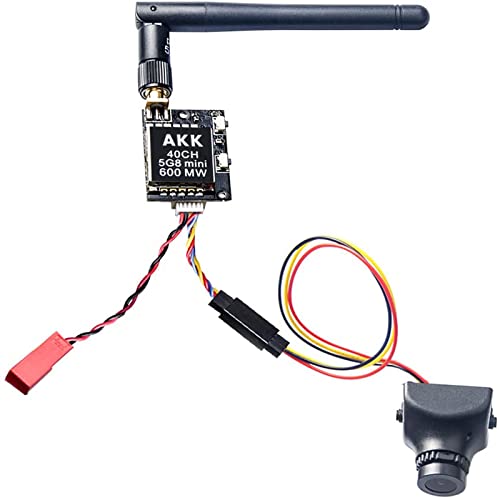
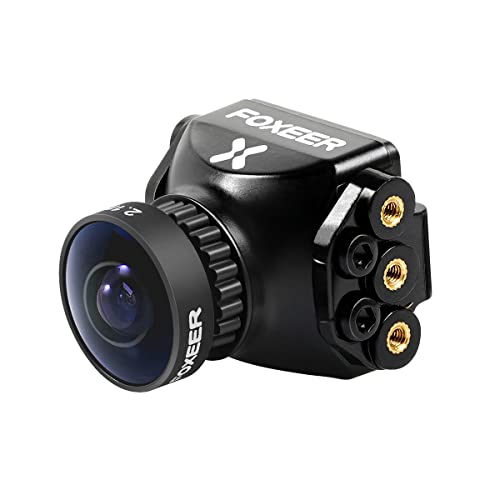
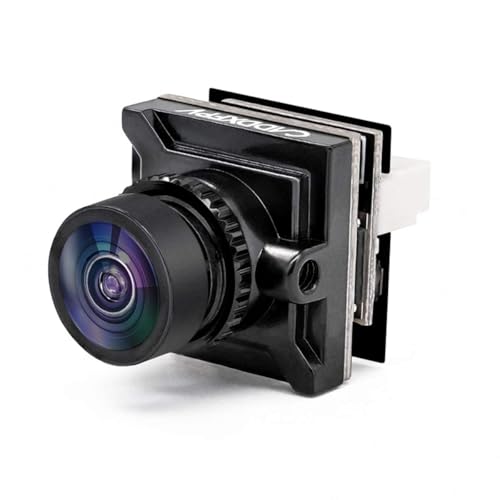
The Analog vs. Digital Divide
The first decision you make when buying an FPV camera is not about the brand or the sensor, but the protocol. In 2026, the market is firmly split between Analog and Digital systems. This is not a matter of preference; it is a matter of hardware compatibility. Analog FPV cameras transmit a composite video signal, while digital systems encode video data. You cannot plug a digital camera into an analog receiver, and vice versa. Your choice here dictates the rest of your build, including your Video Transmitter (VTX) and your FPV goggles.
For the racing and freestyle pilot, Analog remains the king of weight and latency. A high-quality analog camera, such as a GoPro-style or a dedicated mini camera, weighs a fraction of its digital counterparts. It integrates seamlessly into lightweight 3-inch and 5-inch builds where every gram counts for power-to-weight ratio. However, you are trading image clarity for speed. The image will be lower resolution, but the feedback loop to your brain is instantaneous.
Digital systems—dominated by DJI, Walksnail, and HDZero—offer a completely different experience. They provide high-definition video, often with audio and telemetry overlays. For long-range pilots or cinematic freestyle, the clarity of seeing distant trees or complex obstacles is unmatched. However, you must accept the trade-offs: increased weight, higher power consumption, and a more complex signal chain that requires careful antenna placement to avoid dropouts.
Latency: The Pilot’s Most Critical Metric
As an engineer, I look at latency as the enemy of performance. Latency is the time delay between the photons hitting your camera sensor and the image appearing on your goggles. In FPV, this delay dictates your ability to react to crashes, navigate tight gaps, and maintain stability at high speeds. This is why low latency is significantly more critical than resolution; a high-resolution image that arrives 50ms late is useless if it causes you to crash into a tree.
Analog FPV cameras typically boast latency in the 1–5ms range. This near-instantaneous feedback is why analog is still the standard for competitive racing. When you are pushing a 5-inch drone to 120+ mph, that few milliseconds of delay can be the difference between a clean flight and a broken carbon fiber frame. The signal path in a modern analog setup is straightforward: Camera -> Flight Controller (for OSD) -> VTX -> Goggles. This direct line minimizes processing overhead.
Digital systems have made massive strides in recent years. Modern digital systems like DJI O3 and Walksnail have reduced latency to 22ms or below. While this is technically higher than analog, the human brain adapts. For freestyle and long-range, the slight increase in latency is often an acceptable trade-off for the vastly improved image clarity. However, for pure racing, the 1–5ms advantage of analog remains hard to beat. Always compare telemetry data from your specific setup, as antenna quality and power levels can impact effective latency.
Sensor Size and Low-Light Performance
The image sensor is the heart of your camera, and its size plays a pivotal role in image quality, especially in challenging lighting conditions. FPV camera image sensors commonly range from 1/3-inch to 1/1.8-inch. The general rule of thumb is that a larger sensor captures more light, resulting in better low-light performance and less noise. However, in FPV, larger sensors come with physical penalties.
A 1/1.8-inch sensor, found in many high-end digital cameras like the DJI O4 Pro, offers superior image quality, clarity, low-light performance, and dynamic range compared to its predecessors. This makes it ideal for long-range flights where you might be flying at dusk or through shaded forests. The O4 Pro is currently rated as better than the O3 in these metrics, providing a clearer picture of distant terrain.
However, larger sensors require larger lenses and more robust housing, which adds weight. For an ultralight 3-inch freestyle build or a micro drone, a large sensor camera might be overkill and detrimental to your flight time. In these cases, a smaller 1/3-inch or 1/4-inch sensor is more adequate. These smaller sensors are lighter and cheaper, and for a pilot flying in bright daylight, the difference in image quality is negligible. Balance your need for low-light capability against your weight budget.
Wide Dynamic Range (WDR) and Outdoor Flying
Wide Dynamic Range (WDR) is a feature that is often overlooked by beginners but is essential for outdoor flying. WDR allows the camera to handle extreme contrast in a single frame. Imagine flying from the deep shade of a tree line into bright, direct sunlight. Without WDR, the camera’s exposure will struggle to adjust, resulting in a "blown out" white image where you lose all detail. This loss of situational awareness can lead to crashes.
High-end analog cameras and most digital systems include WDR processing. In analog, this is often achieved through hardware adjustments or specific OSD settings that compress the dynamic range. In digital systems, the processing is more sophisticated, allowing for better detail retention in both shadows and highlights. For freestyle pilots flying in parks or urban environments, WDR is non-negotiable. You need to see the texture of the concrete and the edges of the rails, even when the sun is glaring.
When comparing cameras, look for WDR specifications in the datasheet. For analog cameras, this might be listed as "WDR" or "Dynamic Range." For digital systems, it is often a built-in feature of the codec. Ensure your camera’s WDR is tuned correctly for your flying environment. Some cameras allow you to adjust the WDR strength via OSD or software, which can be crucial for adapting to different lighting conditions.
Field of View (FOV) and Lens Selection
The Field of View (FOV) determines how much of the world you can see around your drone. FPV camera FOV is typically between 120 and 160 degrees. A wider FOV provides better situational awareness, allowing you to see obstacles approaching from the sides. However, a wider FOV can also introduce distortion, making it harder to judge distance and speed.
For racing, a narrower FOV (around 120-130 degrees) is often preferred. This provides a more focused view, reducing peripheral distraction and helping you lock onto the gate or finish line. It also tends to have less barrel distortion, which can help with precise control. In contrast, freestyle pilots often prefer a wider FOV (140-160 degrees) to see the entire trick and the surrounding environment. This helps in planning lines and avoiding obstacles during complex maneuvers.
When selecting a camera, check the lens specifications. Some cameras have fixed lenses, while others allow you to swap lenses. For digital systems, the lens is often integrated, so you must choose the camera model that matches your desired FOV. For analog, you might have the flexibility to change lenses, but this adds complexity and potential points of failure. Stick to a lens that matches your flying style to avoid confusion.
Mounting, Weight, and Tilt Angles
The physical installation of your camera affects both the weight distribution and the pilot’s perspective. FPV cameras are typically mounted on the front of the drone frame, but the tilt angle is crucial. Recommended vertical tilt angles for racing are 40–60 degrees, pointing the camera more downwards to see the ground and obstacles ahead. For freestyle, a tilt of 20–35 degrees is more common, providing a more level view that helps in judging height and distance during tricks.
Weight is always a concern. Every gram of camera weight adds to the nose-heavy tendency of your drone, which can affect handling. Use the lightest camera that meets your performance needs. For digital systems, ensure that the camera’s weight is balanced by the rest of the drone. A heavy camera on a light frame can make the drone feel sluggish and less responsive.
Also, consider the mounting interface. Most modern cameras use a standard 20x20mm or 30x30mm mounting pattern. Ensure your camera’s mounting holes align with your drone’s camera mount. Some cameras come with adjustable mounts, allowing you to fine-tune the tilt angle. Use these adjustments to get the perfect view for your flying style. A misaligned camera can cause eye strain and make flying more difficult.
Frequently Asked Questions
Can I use an analog camera with digital goggles?
No, analog and digital FPV systems are not compatible. You need a digital camera for digital goggles and an analog camera for analog goggles. Mixing them requires a converter, which adds latency and cost.
What is the best FOV for freestyle flying?
A Field of View between 140 and 160 degrees is generally recommended for freestyle. This provides a wider view of the environment, helping you see tricks and obstacles from different angles.
Does a larger sensor always mean better video?
Not necessarily. While larger sensors (like 1/1.8-inch) perform better in low light, they add weight and cost. For ultralight builds or bright daylight flying, smaller sensors (1/3-inch) are often more adequate and efficient.
How important is WDR for outdoor flying?
WDR is essential for outdoor flying. It prevents the image from blowing out when transitioning from shade to bright sunlight, maintaining visibility of obstacles and terrain.
What is the typical latency for modern digital FPV systems?
Modern digital systems like DJI O3 and Walksnail have reduced latency to 22ms or below. This is higher than analog (1-5ms) but is often acceptable for freestyle and long-range flying due to the improved image clarity.
How do I choose the right tilt angle for my camera?
For racing, aim for 40-60 degrees to see the ground and obstacles. For freestyle, 20-35 degrees is better for a level view. Adjust based on your specific flying style and drone setup.
Conclusion
Choosing the right FPV camera in 2026 is about balancing latency, weight, and image quality to match your specific flying style. Whether you are a racer chasing the 1-5ms latency of analog or a freestyle pilot embracing the clarity of digital systems like DJI O4 Pro, the camera is the window to your drone’s world. Prioritize WDR, appropriate FOV, and sensor size for your environment, and ensure your camera is compatible with your existing video system. Start by defining your primary use case—racing, freestyle, or long-range—and let that guide your choice of camera and lens. Happy flying.


