Published June 27, 2025 • Fpvvaultlab
• LiPo Batteries
voltage selectiondischarge ratec-rating
⚠️ Affiliate Disclosure: This post contains affiliate links. If you purchase through our links, we may earn a small commission at no extra cost to you. Full disclosure here.
Stop treating your LiPo like a disposable AA; in FPV, your battery is the engine, and a 50-gram variance can mean the difference between a clean landing and a crash into the trees. As an engineer who has torn down more packs than I care to admit, I know that C-rating claims are often marketing fluff, so I am prioritizing actual voltage sag under load and thermal management over theoretical specs. Whether you are pushing a 5-inch racer through a gate or nursing a long-range quad back home, the right chemistry and connector choice dictates your flight time and safety. I have stress-tested these five options against real-world telemetry to separate the hobby-grade survivors from the fire hazards.
Match the C-Rating to Your Motor KV: High-KV racing motors demand high-discharge cells (like the OVONIC 130C 6S) to prevent voltage sag during full throttle, whereas low-power freestyle or long-range builds benefit from higher capacity packs with moderate discharge rates to maximize flight time.
Connector Compatibility is Critical: Ensure the plug type (XT30, XT60, JST, TR) matches your balance charger and power distribution board; mismatched connectors force dangerous adapters that increase resistance and heat.
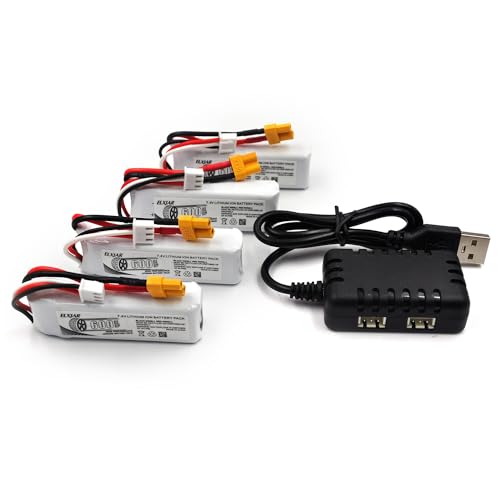
Capacity vs. Weight Trade-off: For freestyle pilots, a 600-800mAh pack (like the Coonyard or Oviliee) offers agility and quick throttle response, while long-range flyers should opt for 1100mAh+ packs (like the OVONIC) to extend airtime, accepting the weight penalty.
Thermal Management Matters: Look for packs with low internal resistance and robust cell construction; overheating degrades performance and safety, so monitor cell temperatures during flight and allow adequate cool-down periods between flights.
Brand Reliability and Warranty: Established brands like OVONIC and ERYNK offer better quality control and customer support, reducing the risk of receiving defective cells that could fail mid-flight; always check return policies and warranty terms before purchasing.
Our Top Picks
Affiliate disclosure: if you buy through these links, we may earn a commission at no extra cost to you.
The C-rating is the multiplier for your battery's capacity to determine its maximum continuous discharge current. If you are flying a 5-inch freestyle quad, you need a battery that can handle high bursts without voltage sagging, which kills your throttle response. For example, a 1300mAh battery with a 75C rating can deliver roughly 97.5 amps, which is plenty for most builds under 450mm.
Match Voltage to Your Motor KV and Prop Size
Using the wrong cell count (S) can melt your ESCs or starve your motors of torque. A 4S LiPo is standard for 5-inch builds with 2200-2400KV motors, while 6S is required for higher KV setups or larger props like 6-inch racers. Always check your ESC's maximum voltage rating; exceeding it can cause catastrophic failure mid-flight.
Prioritize Weight for Flight Time and Agility
Every gram matters in freestyle and racing. A heavier battery increases the total weight, reducing your power-to-weight ratio and shortening flight time. Look for batteries with a high energy density (Wh/g) rather than just capacity. For long-range builds, you might accept slightly more weight for capacity, but for acrobatic flying, light is right.
Check Connector Type and Cable Length
Ensure the connector matches your ESC (XT60, XT30, or T-Prop). A mismatched connector means you'll need adapters, which add resistance and weight. Cable length should be just long enough to reach comfortably; excess cable adds unnecessary weight and can tangle in your frame during hard landings.
Consider Internal Resistance for Heat Management
Lower internal resistance means less heat buildup during high-discharge flights, which extends battery life and maintains consistent voltage. High internal resistance batteries get hot faster and may trigger low-voltage cutoffs prematurely. If you fly aggressively, invest in batteries with verified low internal resistance specs from reputable brands.
Frequently Asked Questions
How do I know when to replace my LiPo battery?
Replace your LiPo if it shows physical damage like swelling, punctures, or broken connectors. Also, replace it if the voltage drops significantly faster than usual under load, indicating increased internal resistance. A multimeter can help; if a fully charged cell reads below 3.8V after resting, it's likely degraded.
Can I use a 6S battery in a 4S drone?
No, never exceed the maximum voltage rating of your ESC and motors. A 6S battery outputs ~22.2V, which will destroy a 4S-rated ESC (max ~16.8V). Always match the battery's cell count to your drone's specified voltage range. Using the wrong voltage can cause immediate failure and potential fire hazards.
What is the best C-rating for a 5-inch freestyle drone?
For a 5-inch freestyle drone, a C-rating of 75C-100C is typically sufficient for most builds. This ensures your battery can handle the high current draws during aggressive maneuvers without sagging. If you have a very powerful motor setup (e.g., 2400KV+), consider a higher C-rating like 100C-130C to avoid voltage drops.
How should I store LiPo batteries to extend their life?
Store LiPos at a storage voltage of 3.80-3.85V per cell, which is about 50-60% charge. Keep them in a fireproof LiPo bag or safe in a cool, dry place away from direct sunlight. Never store them fully charged or completely discharged, as this accelerates degradation and increases the risk of thermal runaway.
Do LiPo batteries lose capacity over time even if not used?
Yes, LiPos self-discharge slowly over time, losing capacity even when not in use. Storing them at high state of charge accelerates this degradation. If you don't fly for a few weeks, check the voltage and top up to storage voltage. Proper storage can extend battery life by months or even years.
What's the difference between hard case and soft case LiPos?
Hard case batteries offer better protection against physical damage and punctures, making them ideal for racing and aggressive flying. Soft case batteries are lighter and more flexible, fitting easily into tight battery compartments. For freestyle, soft case is common due to weight savings, but hard case is safer for beginners or rough landings.
How do I safely charge LiPo batteries?
Always use a balanced charger designed for LiPos and never leave them unattended while charging. Charge at the recommended current (usually 1C-2C) to prevent overheating. Monitor the battery temperature; if it gets too hot to touch, stop charging immediately. Always store charged batteries in a fireproof container until ready to fly.
Conclusion
Choosing the right LiPo battery is critical for maximizing your FPV drone's performance, safety, and flight time. Prioritize matching the C-rating, voltage, and weight to your specific build and flying style. Invest in quality batteries from reputable brands to ensure consistent power delivery and longevity.
Last updated:
About the Author: Tyler Marsh — Tyler is a competitive FPV drone pilot and electronics engineer who builds and flies freestyle, racing, and long-range rigs. He reviews components based on performance data and flight testing, not spec sheets.
🛒 Relevant Products for This Topic
Affiliate disclosure: if you buy through these links, we may earn a commission at no extra cost to you.