

Best Fpv Cameras For Everyday Use In 2026
🏆 Top Picks at a Glance
 #1
Best Overall
CADDXFPV Ratel 2 Analog FPV Camera, Black, 1200TVL, Starlight
$45.99
Check Price →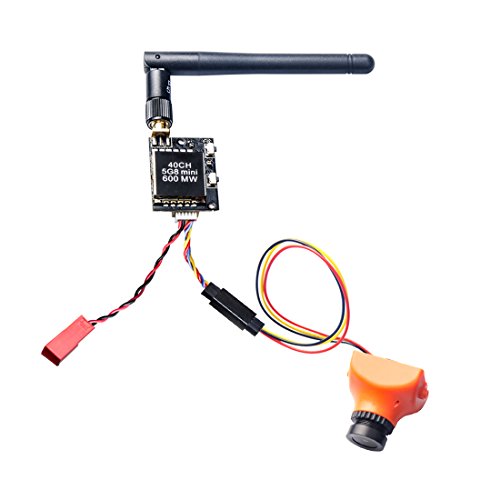 #2
Runner Up
AKK KC02 600mW FPV Transmitter with 600TVL 2.8MM 120 Degree High Picture Quality Sony CCD Camera for FPV Multicopter
$37.99
Check Price →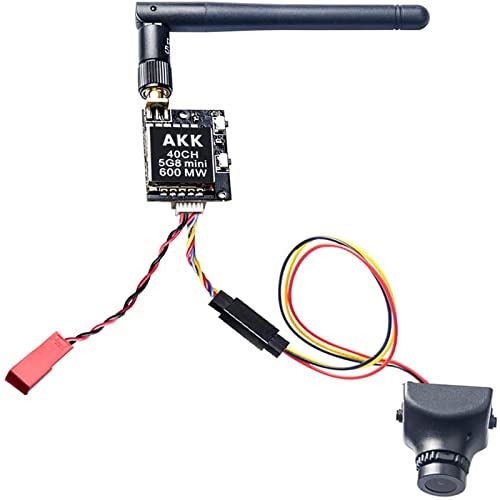 #3
Best Value
AKK KC04 5.8G 600mW FPV Transmitter 700TVL 2.8mm 120 Degree FPV Camera for Racing Quadcopter
$34.99
Check Price →The best FPV camera for everyday flying is not necessarily the one with the highest TVL number—it is the camera that keeps latency low, preserves detail in changing light, and adds as little weight as possible to the build. This roundup covers practical analog options, including the starlight-oriented CADDXFPV Ratel 2, integrated AKK camera/VTX units, and the lightweight 1200TVL RunCam Robin 3. Oscar Liang identifies DJI, Walksnail, and HDZero as the three major digital FPV ecosystems, but analog and digital cameras are not interchangeable, so compatibility comes before resolution. We’ll break down which options make sense for racing, freestyle, long-range flying, and general daily use.
⚡ Quick Answer: Best Fpv Cameras
Best for Low-Light Flying: CADDXFPV Ratel 2 Analog FPV Camera, Black, 1200TVL, Starlight
$45.99 — Check price on Amazon →
Table of Contents
Main Points
- Choose the video ecosystem first: the AKK KC02, KC04, and BA3 combine analog cameras with analog transmitters, while the Ratel 2 and Robin 3 are analog camera choices that require a compatible analog VTX; none of these is a plug-and-play replacement for DJI, Walksnail, or HDZero hardware.
- For everyday flying, balance latency, dynamic range, low-light performance, field of view, aspect ratio, and weight instead of shopping by TVL alone. Oscar Liang’s FPV camera guide highlights these factors as core parts of camera selection.
- The RunCam Robin 3 is the weight-conscious option on paper, with a listed 5.9-gram weight, 1200TVL resolution, and 150-degree field of view—an appealing combination for lightweight freestyle, racing, and compact builds where power-to-weight ratio matters.
- The CADDXFPV Ratel 2 is the more visibility-focused analog choice for pilots who fly at dusk or in changing light, while its 1200TVL specification makes it a stronger fit for pilots who want a sharp analog image without moving to a digital system.
- Integrated AKK camera/VTX units simplify small builds: the KC02 offers 600mW transmission with a 600TVL camera, the KC04 pairs 600mW with 700TVL, and the BA3 provides switchable 0/25/50/200mW output for tiny-whoop-style aircraft. Use the lower power settings for close-range racing and lightweight indoor flying, reserving higher output for outdoor range where regulations and cooling permit.
Our Top Picks
Affiliate disclosure: if you buy through these links, we may earn a commission at no extra cost to you.
Factors to Consider
Frequently Asked Questions
Are analog FPV cameras compatible with digital FPV systems?
No. Analog cameras output an analog video signal and cannot connect directly to DJI, Walksnail, or HDZero digital systems. Oscar Liang identifies DJI, Walksnail, and HDZero as the three major digital FPV systems, and each digital camera generally belongs to its specific ecosystem.
What is the best FPV camera for everyday flying?
The RunCam Phoenix 2 Micro is a well-rounded everyday analog option because it combines a 1000TVL specification, a 155-degree field of view, and switchable 4:3 and 16:9 formats. FPV Vault Lab lists it at approximately $39.99, but the best choice still depends on your goggles, VTX, frame size, and preference for latency versus image quality.
Is a higher TVL rating always better?
No. TVL is useful for comparing analog sharpness, but it does not measure latency, dynamic range, low-light performance, lens distortion, or how well the camera handles rapidly changing light. A lower-rated camera with better exposure behavior may be more useful in real flight than a sharper camera that loses detail in shadows or highlights.
What field of view should an FPV camera have?
A wider field of view improves situational awareness and can help with freestyle, proximity flying, and navigating tight spaces. However, wider lenses can add distortion, so choose a field of view that gives enough peripheral visibility without making gates, lines, or the horizon look unnaturally curved.
Should I use 4:3 or 16:9 for FPV?
Choose 4:3 when you want more vertical information for freestyle, obstacle clearance, or a taller image in your goggles. Choose 16:9 when your display and flying style favor a widescreen view, and consider a camera such as the RunCam Phoenix 2 Micro if you want to switch between both formats.
What FPV camera is best for racing?
Racing builds benefit most from low latency, low weight, a compact form factor, and a consistent image that makes gates easy to place. The RunCam Robin 3 is listed by FPV Vault Lab at 5.9 grams, 1200TVL, and a 150-degree field of view, which are attractive specifications for a lightweight analog race build.
Can an FPV camera replace an action camera?
Some digital FPV systems offer onboard recording, but the recording quality, stabilization, lens correction, and storage features may not match a dedicated action camera. Treat onboard recording as a way to reduce payload and capture convenient flight footage, not as an automatic replacement when you need polished, stabilized video.
Conclusion
For everyday analog FPV, the CADDXFPV Ratel 2 Analog FPV Camera, Black, 1200TVL, Starlight is the strongest all-around choice when low-light performance and image detail matter. For lighter builds, consider FPV Camera RunCam Robin 3- Micro Drone Camera 1200TVL FOV150° Wide Angle 5.3g for RC FPV Drone Car Plane Racing.


